Geinsheim · 65468 · Hessisches Ried · since 2026
Conservation that works on your doorstep, and in your annual report.

We steward farmland in the Hessisches Ried for the benefit of soil, water and biodiversity, then translate that impact into HKV-compliant ecological credits and CSRD-/ESRS audit-ready evidence. Local. Transparent. No overhead.

HKV-compliant ecological credits
under Section 15 BNatSchG
ESRS E1–E5 impact data
audit-ready documentation
Habitats Directive site 6116-301
right on our doorstep
100 % of funds
into land & monitoring
Mission

Offsetting has to be real — and verifiable.

The market for "green" offsetting has grown large, and confusingly so. Certificates from overseas, double-counting, opaque middlemen. We do the opposite:

  • Land, not promises. What we sell sits in the Hessisches Ried and is on the public land register.
  • Managed by the owner. No subcontractors, no corporate layers in between — direct contact with the person responsible.
  • Evidence included. Every client receives ESRS-compliant impact reports ready to lift straight into their own management report.
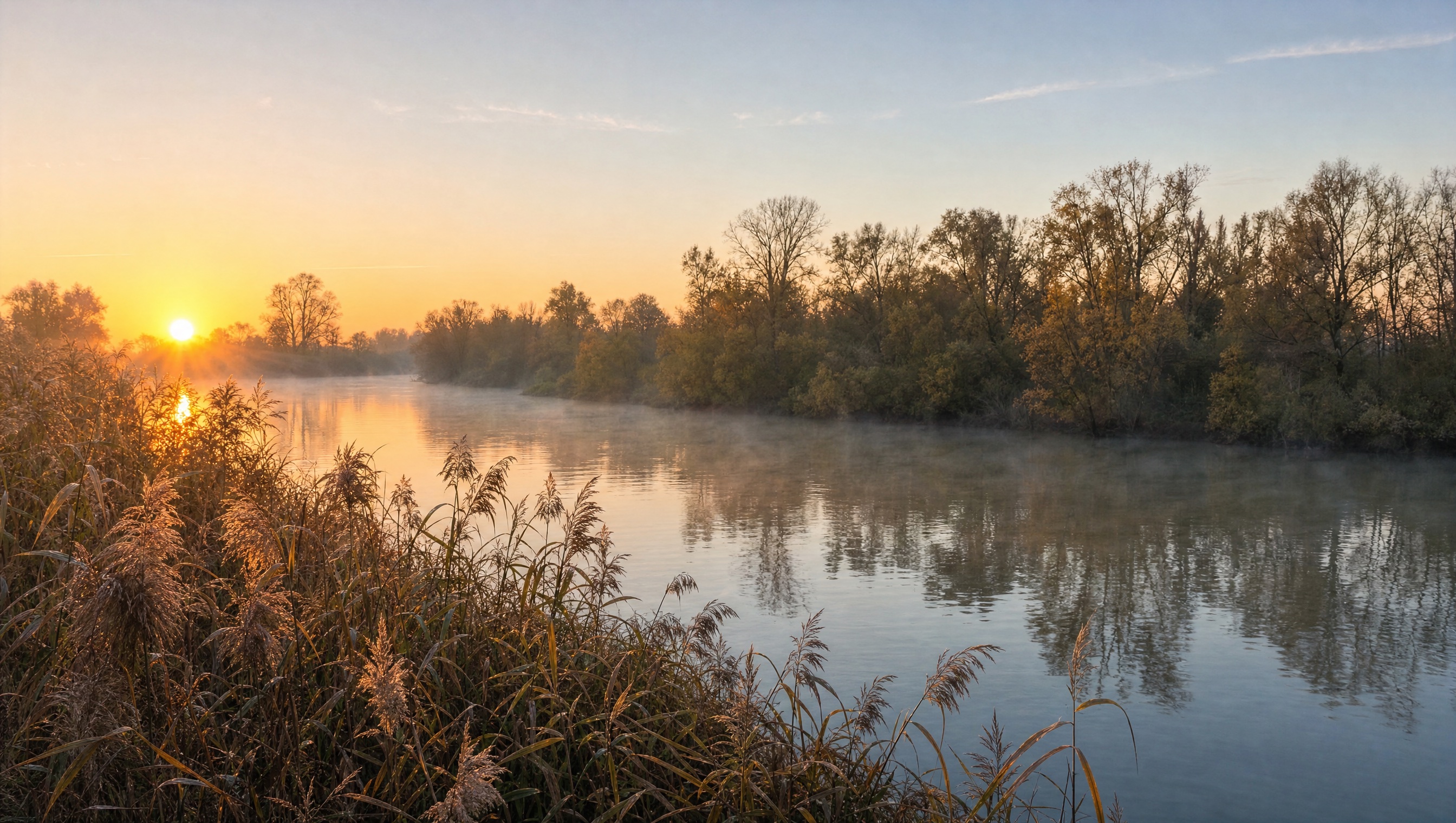
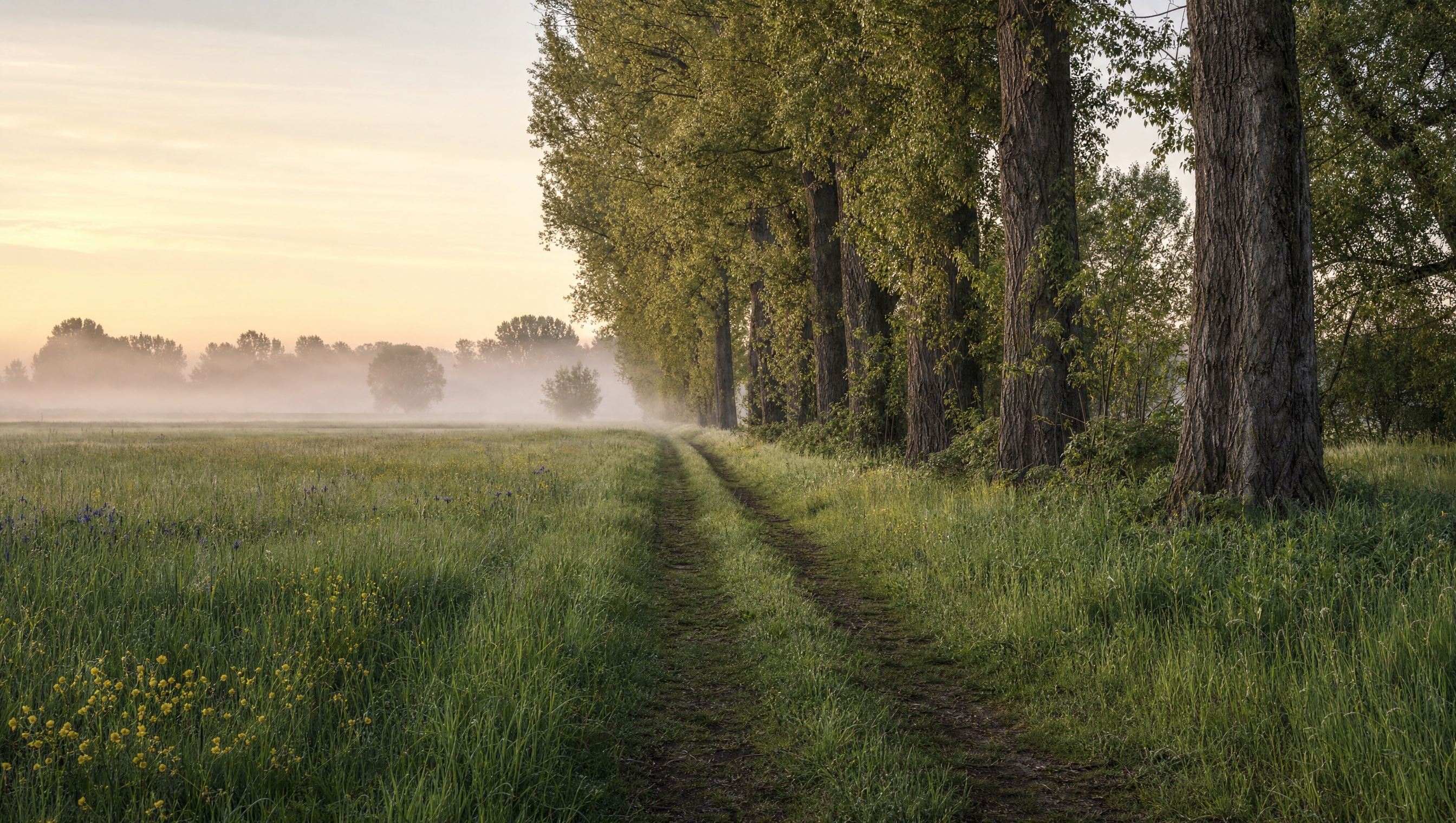
Sunrise over the old Rhine arm near Geinsheim, reed beds and floodplain landscape
Region 65468 · Geinsheim am Rhein

Germany's underestimated heartland.

If you drive from Frankfurt to Mannheim you take the A67. ICE commuters know the sign at Riedstadt. Almost no one stops.

The Hessisches Ried, where our Geinsheim sits, is one of Germany's most precious, and most overlooked, natural landscapes. Framed between the Odenwald and the Rhein, between Mainz and Mannheim, a broad, fertile lowland pushes into the country here — geologically part of the Upper Rhine Graben: the region with the warmest, most Mediterranean-like climate in Germany.

On the dry sandy grasslands nest wild bee species that elsewhere live only south of the Alps. The kingfisher hunts in the old Rhine channels. In the neighbouring Kühkopf-Knoblochsaue, the largest nature reserve in Hessen, the white stork breeds reliably again, the beaver is building, and on clear winter days thousands of migrating birds stop here on their journey between Scandinavia and West Africa.

Beneath our fields lies the drinking-water reservoir of the Rhine-Main region: what comes out of Frankfurt's taps is drawn in large part from the groundwater pumped here — right under Geinsheim, Trebur and Wallerstädten.

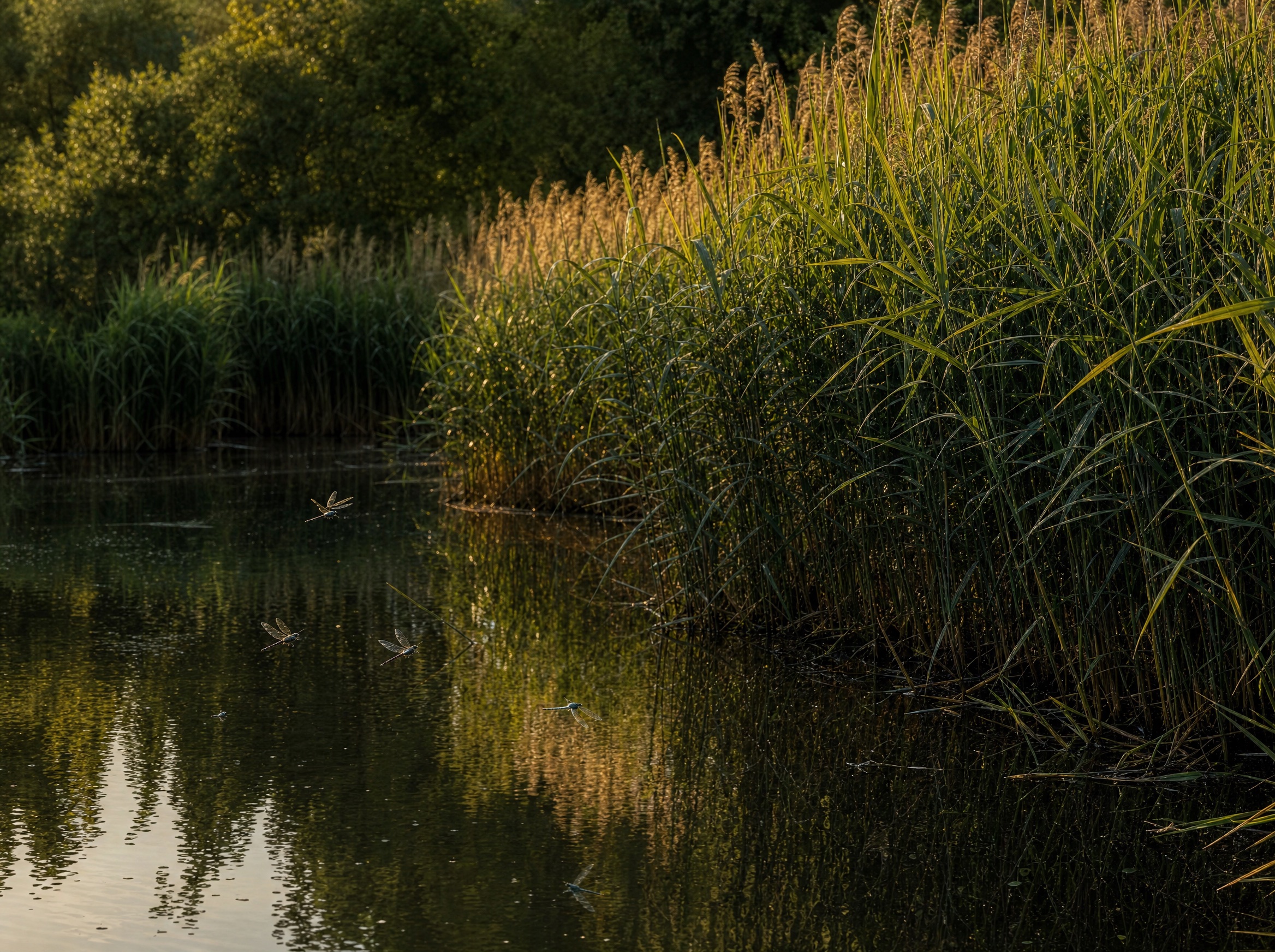
Old Rhine arm near Geinsheim with reed beds in evening light

Water

Drinking-water reservoir for 2 million people across the Rhine-Main region. Every square metre kept free of pesticides and nitrogen matters for the groundwater under our feet — ESRS E3.

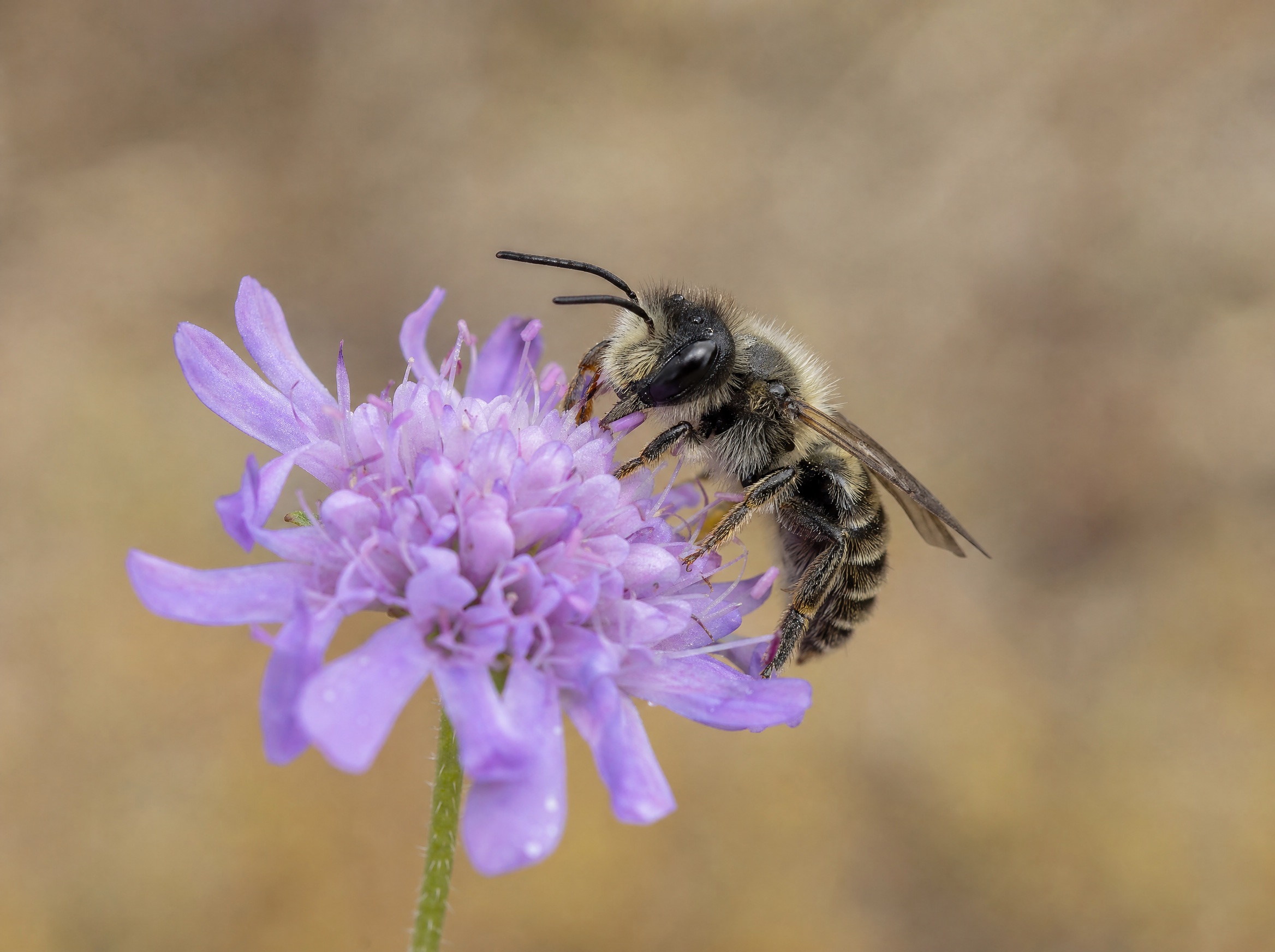
Wild bee on the flower of a reed-meadow plant, macro shot

Biodiversity

Thanks to the mild climate, species live here that you'll find nowhere else in Hessen — wild bees, tiger beetles, grasshoppers, lapwing, kingfisher, white stork. A living refuge.

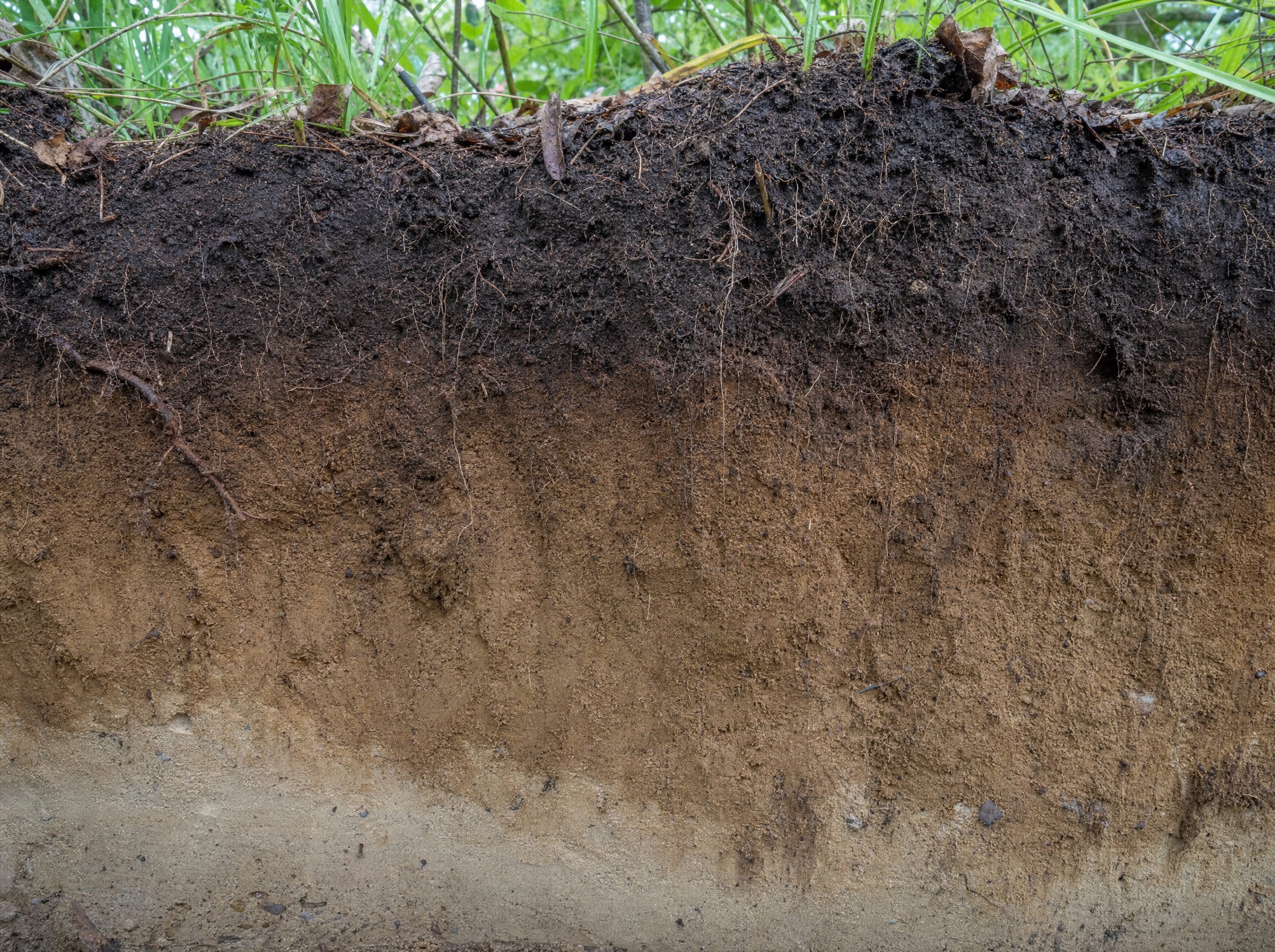
Cross-section through dark floodplain soil showing root network and humus horizon

Soil carbon

Floodplain soils are natural carbon stores. Low-intensity management builds humus, locking in 0.3–1.0 t CO₂e per hectare per year over the long term (ESRS E1).

Stocktake

Why this region flies under the radar.

01

There is no skyline.

Surrounding it, yes: Frankfurt's bank towers, Mannheim's industry, Mainz cathedral. Here in the middle: fields, water, reeds. It doesn't photograph well for Instagram.

02

It gets driven through, not visited.

A67, A60, Frankfurt Airport, the Ried railway line. The image: transit corridor, logistics, noise. Yet two minutes off the motorway, a Habitats Directive site begins.

03

Its treasures are quiet.

A stork's nest. A reed bed in the wind. A wild bee population shuttling between two patches of dry grassland. No one writes features about them. But they are there.

04

Climate change hits it first.

The water table has been falling for decades. Floodplains are drying out. Forests in the Ried are tipping over. What is lost here doesn't return — unlike on the North Sea coast, there is no second Ried landscape to fall back on.

That is exactly why we work here, and not somewhere else. Conservation in the Hessisches Ried is not a gesture. It is the duty of those who live here.

[Placeholder] — Interactive map: Geinsheim, Kühkopf-Knoblochsaue, natural-region boundary 224 and our actual stewardship parcels.

On our doorstep · Habitats Directive site

The Wächterstadt reed-meadows.

Site code 6116-301 · two kilometres south-west of Geinsheim
There is one place where the whole story of this landscape can be read in a single day: a silted-up loop of the Rhein that the river abandoned centuries ago. Today it is a Habitats Directive site of national importance — and what we are trying to protect across this region can be seen here with your own eyes.

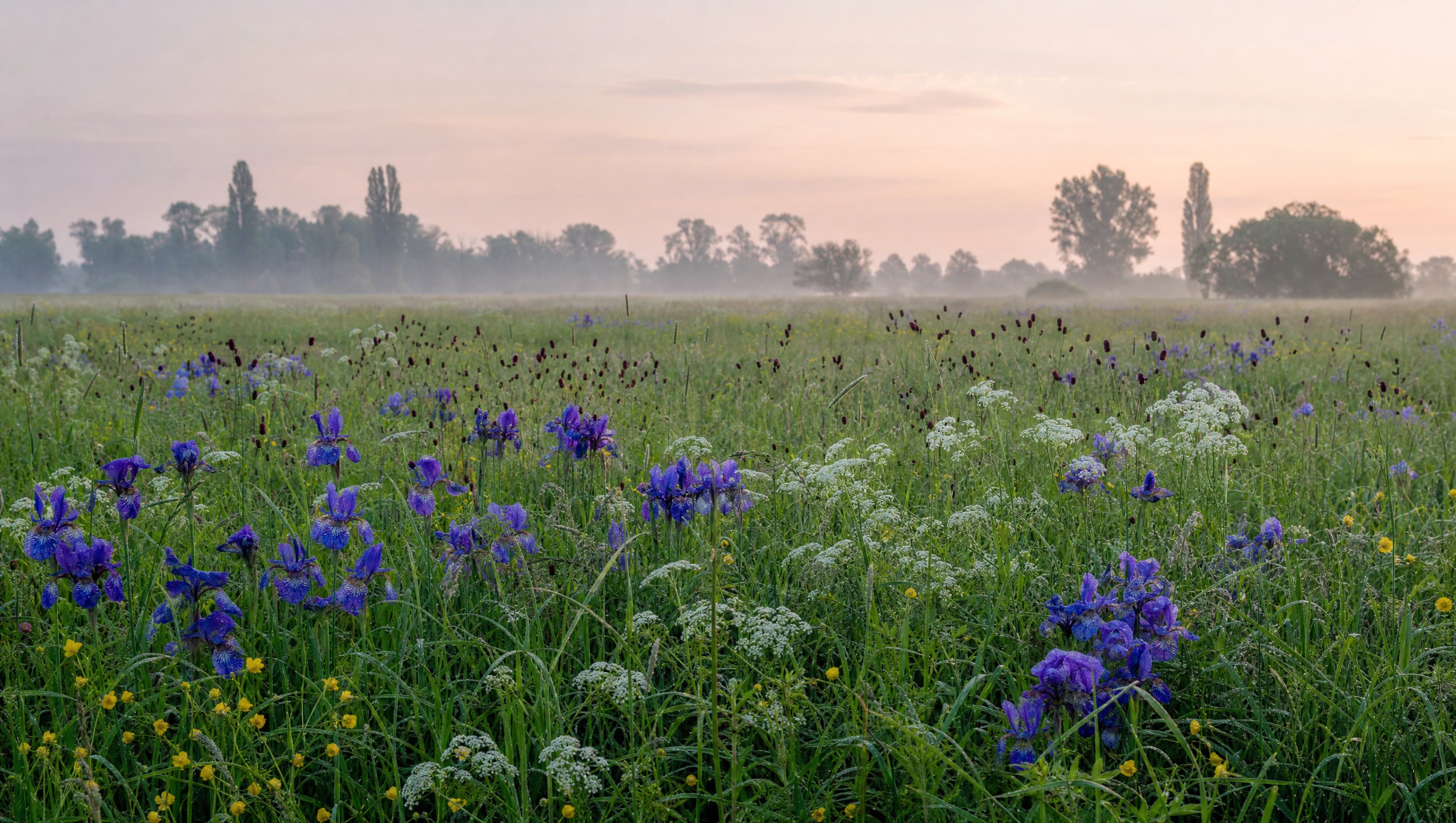
Cnidion flood-meadow with Iris sibirica in morning mist, typical vegetation of the Wächterstadt Habitats Directive site

"In its specific landscape character and aesthetic, it is also one of the few outstanding examples of the historic diversity of the cultural landscape of the Rhein floodplain."

Source: Justus-Liebig-Universität Gießen, Habitats Directive baseline survey, 2002

One landscape in three time-layers.

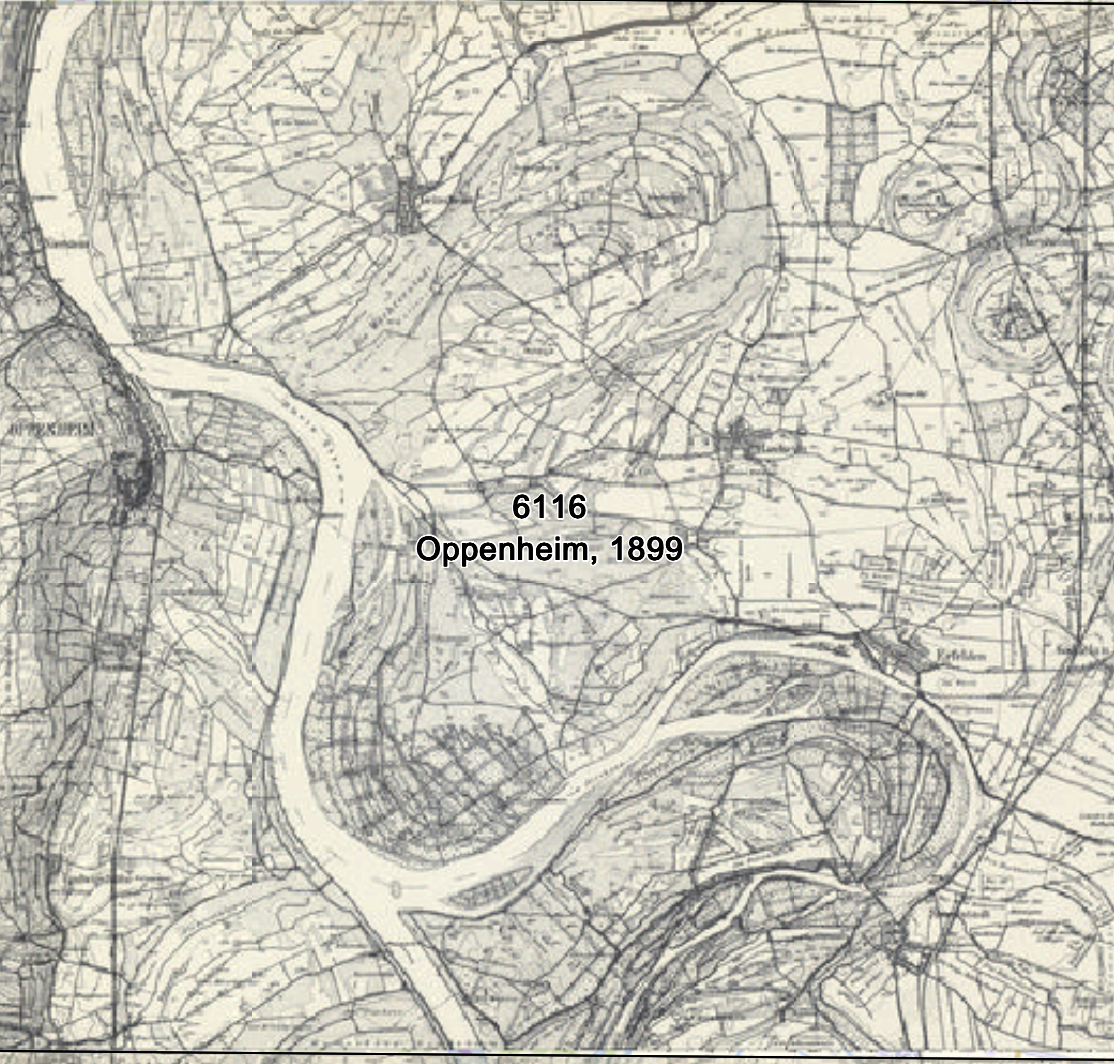
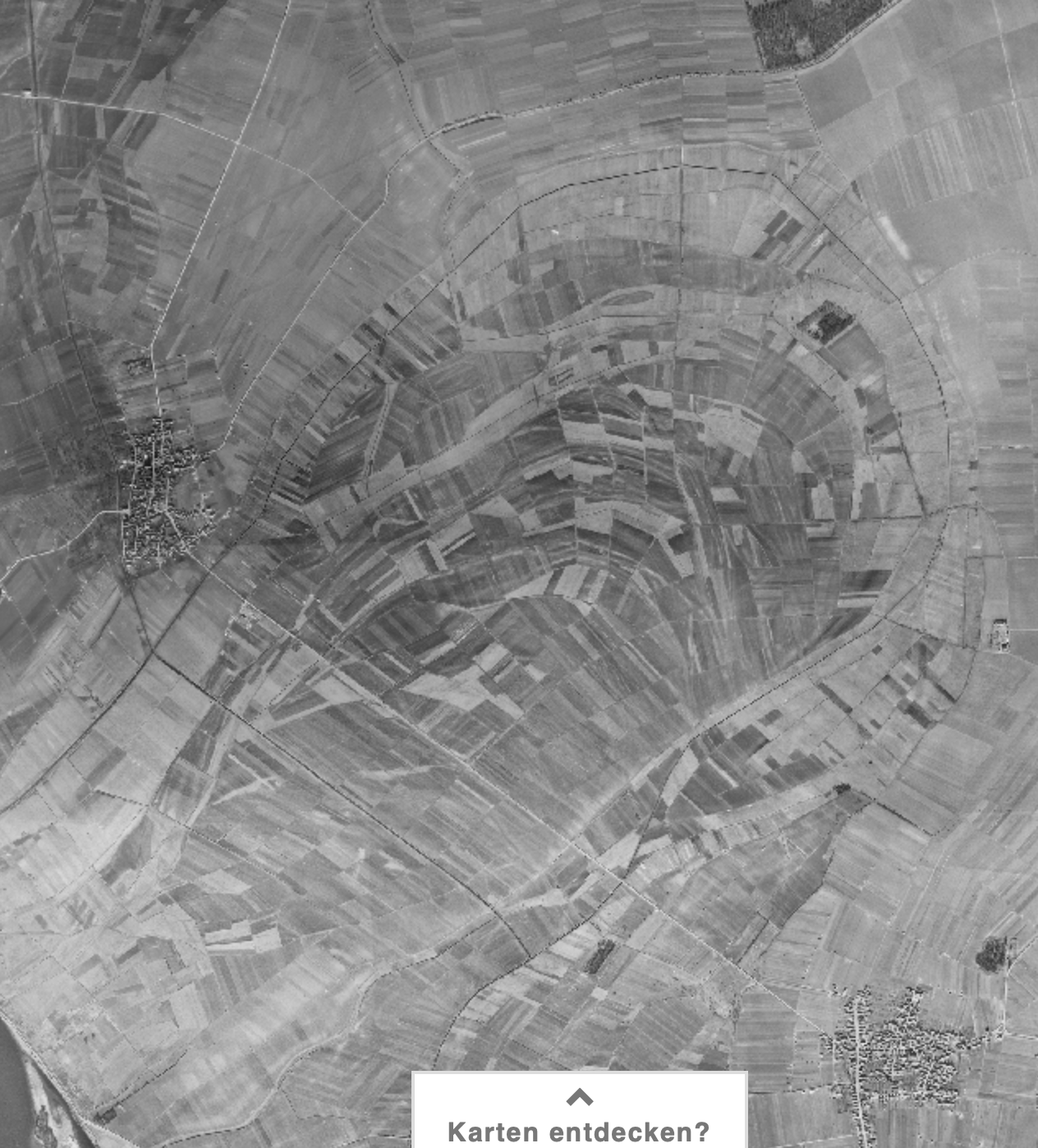
The old Rhein loop shows up on every map, long after the river itself has moved elsewhere. The landscape's memory is stubborn.

Historical Prussian topographic map sheet 6116 Oppenheim from 1899 showing the Rhein loop near Geinsheim
1899

Topographic sheet 6116 Oppenheim

By this date the Rhein had already been straightened by Tulla, but the old meanders are still clearly visible as cut-off arms and loops in the land.

Aerial photograph of Geinsheim pre-1955 with the silted-up Rhein loop clearly visible
pre-1955

Aerial view · strip-fields and old loop
From the air the silted-up Rhein curve traces a perfect semicircle — today the core of the Wächterstadt reed-meadows.

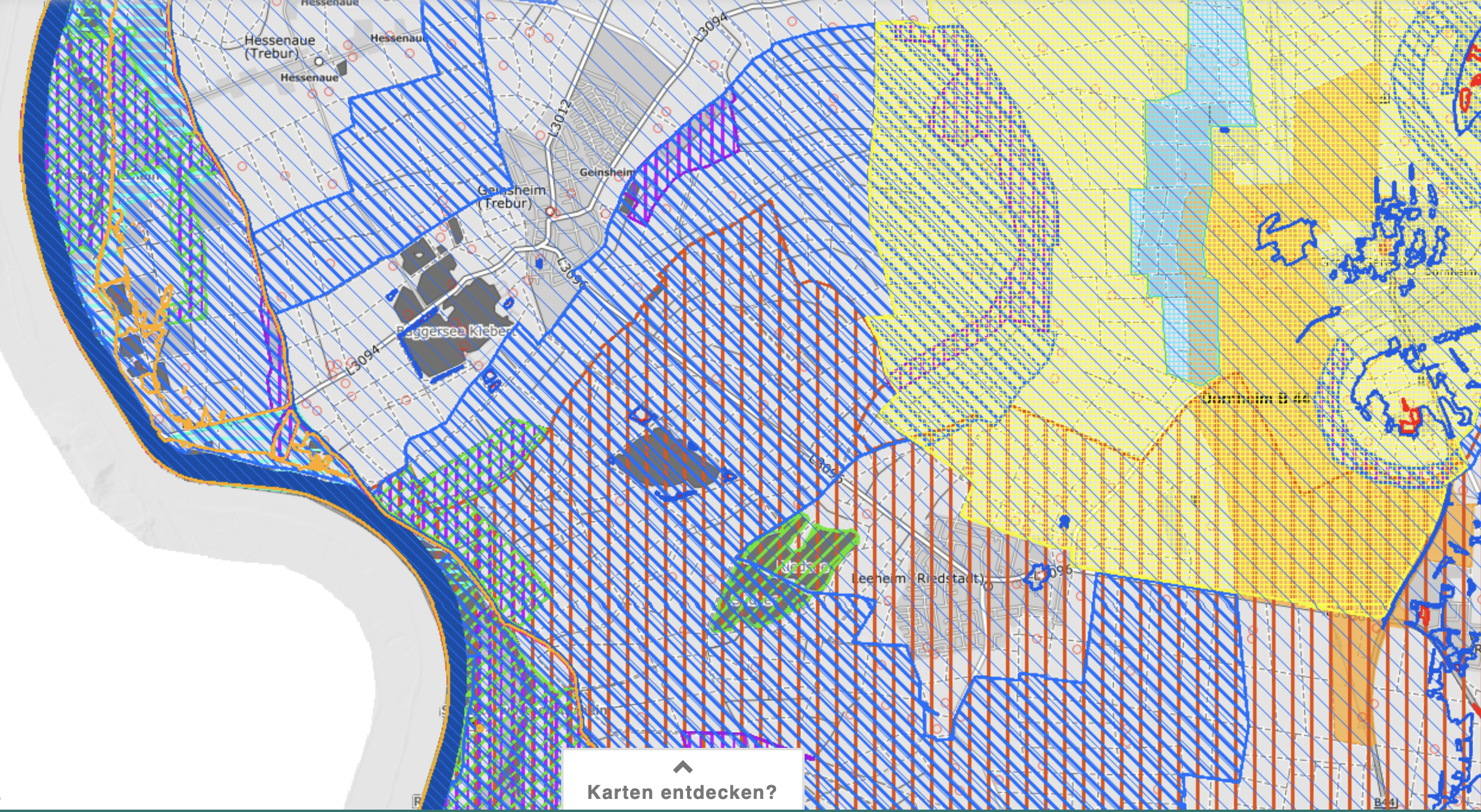
Current map of protected areas around Geinsheim and Trebur with Habitats Directive and Birds Directive sites
Legend
  • NSG Nature reserve
  • FFH Natura 2000
  • VSG Birds Directive
  • LSG Landscape
today

Protected-area network around Trebur

A dense weave of four protection categories — the knowledge is there; the stewardship needs us.

Source: NATUREG Hessen / Geoportal Hessen — colour coding follows the official designations.

Why this matters nationally.

The Wächterstadt meadows sit in a climatic anomaly — the "Mainzer Trockengebiet" with only 586 mm of rainfall a year and a July mean of 19 °C, a sub-continental island in the middle of western Germany.

That is exactly the key. Combined with the alternating wet-and-dry floodplain, you find plants here whose main range actually lies in the continental river valleys of Eastern Europe, and which reach the westernmost edge of their global distribution on the Upper Rhein. There is almost nowhere else in Germany where this still occurs.

The Cnidion flood-meadows (Habitats Directive habitat type 6440, grade A) and Molinia meadows (habitat type 6410) are described by JLU Gießen as "one of the last examples of the structural and species richness of this historic cultural landscape". What disappears here does not come back.

What we are defending here.

An extract from the species inventory — not marketing, but scientifically recorded populations from the Habitats Directive baseline survey. Every species a reason in its own right.

Plants · river-valley specialists
  • Iris sibirica · Siberian iris
  • Iris spuria · Blue iris
  • Cnidium dubium · Marsh cnidium
  • Pseudolysimachion longifolium · Long-leaved speedwell
  • Allium angulosum · Mouse garlic
  • Galium boreale · Northern bedstraw
  • Sanguisorba officinalis · Great burnet
  • Silaum silaus · Pepper-saxifrage
  • Viola persicifolia · Fen violet
Birds · EU Birds Directive
  • White stork · Ciconia ciconia
  • Bluethroat · ~30 territories in the reserve
  • Marsh harrier · breeds in the reeds
  • Stonechat · numbers rising
  • Red-backed shrike · Lanius collurio
  • Penduline tit · Remiz pendulinus
  • Little owl · Athene noctua
  • Lapwing · in the eastern margin
  • Eurasian curlew — locally extinct
Insects & amphibians
  • Great crested newt · Habitats Directive Annex II
  • Common spadefoot · Pelobates fuscus
  • European green toad · Bufo viridis
  • Scarce large blue butterfly · Habitats Directive species
  • Five-spot burnet moth · Zygaena trifolii
  • Long-headed grasshopper · Parapleurus alliaceus — extremely rare
  • Large marsh grasshopper · Stetophyma grossum
  • Short-winged conehead

This is not "just another" nature reserve. This is the genetic library of a landscape that has been disappearing across Germany for decades — and which here, we still have.

For organisations

CSRD obligations? We deliver the impact and the evidence.

Since 2024 the Corporate Sustainability Reporting Directive has required audit-ready sustainability reporting against the European Sustainability Reporting Standards. We address all five environmental topical standards (E1–E5) — auditable and data-ready.

E1

Climate change

Humus build-up, reduction of N₂O emissions from fertiliser, fewer fossil-fuelled machine hours.

CO₂e reduction · t/ha/year

E2

Pollution

No more pesticide or nitrogen inputs into the soil and groundwater of the Ried catchment.

Reduction · kg N/ha/year

E3

Water resources

Protection of groundwater availability in a region that supplies drinking water to Rhine-Main.

m³ protected yield / year

E4

Biodiversity

Habitat for wild bees, pollinators, soil fauna and ground-nesting birds. Habitat indicators.

Habitat index · Δ species count

E5

Circular economy

No synthetic fertiliser, locally closed seed loops, regenerative land use.

Input reduction · %/ha

A note on double materiality: our measures address both impact materiality (effect on the environment) and financial materiality (de-risking supply chains exposed to water and climate stress). Both perspectives are documented in our report.

For organisations under CSRD

Let's talk before you publish.

Tailored packages with ESRS E1–E5 impact data and genuine HKV ecological credits from our eco-account. Volumes, reporting depth and evidence formats are agreed before contract — so the data is actually usable by your external auditor.

Request a proposal

30-min introductory call · free of charge

Law & offsetting

What ecological credits are — and what they're not.

Ecological credits ("Ökopunkte") are the accounting unit for compensation measures under Sections 13 ff. of the German Federal Nature Conservation Act (BNatSchG) and the Hessian Compensation Ordinance (HKV). Anyone whose project intervenes in nature and landscape — property developers, transport infrastructure, commercial estates — must offset those impacts. Instead of planning every measure from scratch, the developer can acquire credits from a recognised eco-account.

Our eco-account in the Hessisches Ried is registered with the competent Lower Nature Conservation Authority. Measures, point values and availability are all on the official record.

A word of honesty: a one-year fallow is not an ecological credit. Credits require permanent measures (typically at least 25 years, often 30). If you want to make a short-term difference, choose our stewardship option; if you have to offset, you need genuine HKV credits from our eco-account.

Your turn

When will you play your part?

Three ways in. Each costs less than you've probably already spent today without thinking about it. And each one works directly on your doorstep.

How does that compare?

High-street prices · 2026 average

Takeaway coffee
€4.20
Can of Red Bull
€1.99
Station baguette
€1.80
Packet of chewing gum
€1.20
Your support for the Ried
€0.99

For the price of half a coffee — one square metre of meadow that won't be mown, sprayed or ploughed for a whole year.

Pay via Apple Pay, Google Pay or PayPal · subscriptions cancellable any time with one click · no hidden fees

Give it a try. one-off

One square metre of meadow for the price of half a pretzel. Once, no commitment, no email spam.

99 cents
one-off · about the price of a corner-shop cola
  • 1 m² of flowering meadow for a season
  • Thank-you email with geo-tagged photo
  • No sign-up, no subscription
  • No impact report
Most popular
Stay with us. monthly

3.3 cents a day. For bees, birds and soil — right on your doorstep. First 30 days free.

99 cents
every month · less than a piece of chewing gum a day
  • A stewardship plot that grows with you
  • Monthly impact snapshot
  • First 30 days free to try
  • One-click cancellation in your account
Roll up your sleeves. annual

27 cents a day. 25 m² of meadow in your name — and you can visit it whenever you like. No streaming service, no avatar: real soil, a real address.

€99
per year · less than a streaming subscription
  • Drop by any time. We'll show you your plot in person.
  • 25 m² of meadow in your name
  • Named plaque at the edge of the plot
  • Invitation to our open spring day
  • Annual impact report (PDF)
Impact & transparency

What your support moves — in numbers.

0.3–1.0 t

additional CO₂e locked in per hectare and year through humus build-up

Source: Thünen Institute, regional averages

+40 %

wild bee diversity on flowering strips versus arable land (average)

Source: Senckenberg study 2023, comparable sites

−100 %

pesticide and synthetic-fertiliser inputs into soil and groundwater

Our own land management, documented

100 %

of funds flow into land, stewardship and monitoring

Owner-run, no middleman

About me · seventh generation

Ludwig Maximilian Schrimpf

Farmer · founder, MeFloTec GmbH · ried-natur.com

Action, not just talk.

On this farm, for seven generations and counting — without a break.

I grew up in Geinsheim, on a farm that has been in our family for more than seven generations. What we now call "regenerative agriculture" was never a marketing label here. It was a series of concrete decisions someone had to take. Each one began with an observation in our own fields. Not one came out of a book.

The milestones that follow are only the most recent — the ones I was there for myself or that my father still documented. Anything earlier is written in the old maps of this region that we showed further up the page.

What came before ried-natur.com — and what it delivers.

Each step alongside the impact we can actually evidence today. Not claims — soil science.

  1. 1998

    No more ploughing.

    My father changes our tillage system — no more inversion ploughing. Almost unknown in the Ried at the time, now internationally recognised as conservation agriculture. Twenty-six years on, the soil is simply not the same soil.

    Water infiltration +40 to +100 % (FAO standard values)
    Earthworm density up to seven times higher than on ploughed land
    Soil carbon +0.3–0.6 t C/ha/year in the 0–30 cm horizon
    Erosion protection: up to 90 % less soil loss
    Mycorrhizal fungal networks stay intact; phosphorus is mobilised
    Fuel saving of 30–50 l of diesel/ha/year
  2. Early 2000s

    Compost with a purpose: building the clay-humus complex.

    We start applying matured compost on a continuous basis — not just as bulk organic matter, but deliberately to build the clay-humus complex. Clay minerals and humus bind via divalent cations (Ca²⁺) into stable aggregates. It sounds like a textbook, but it works in the field:

    Per percentage point of humus: +20 l water storage/m³ of soil
    Cation-exchange capacity (CEC) rises — nutrients stay in the soil, not in the groundwater
    Aggregate stability: protection against capping, erosion and compaction
    Glomalin (the fungal "soil glue") locks in carbon for centuries
    Microbial diversity: up to 10,000 bacterial species per gram of soil
    Sources: Scheffer/Schachtschabel · IPCC AR6 WG3
  3. 2002

    Peas: nitrogen from the air, not from a bag.

    We add field peas to the rotation. Peas are legumes, living in symbiosis with nodule bacteria (Rhizobium leguminosarum) and fixing nitrogen straight from the air. What conventional farms buy in as energy-intensive mineral fertiliser, the roots do for us — free of charge.

    Biological nitrogen fixation: 70–150 kg N/ha per cropping year
    Pre-crop value for the following crop: 30–50 kg N/ha of "fertiliser credit"
    Avoids Haber-Bosch fertiliser — for every kg N fixed: −2.5 kg CO₂e from upstream production
    Breaks the maize-wheat monoculture, easing pest and disease pressure
    A home-grown protein crop — no import dependency
    Flowering window: a major nectar source for pollinators
  4. 2012

    Soya beans: ten years of legume know-how, the next step.

    Ten years after the peas, we take a punt on soya beans — long before the Hessen climate was officially deemed "suitable". Our own trials, our own yields, our own data. The basis for my university coursework. Soya fixes another 50 % more nitrogen than peas, with a deeper root and a higher protein yield.

    Symbiosis with Bradyrhizobium japonicum: 100–200 kg N/ha per cropping year
    Pre-crop value: 30–60 kg N/ha of fertiliser credit
    Tap root reaches deep into the subsoil — biological loosening instead of deep ploughing
    Replaces imported soya from the Amazon basin (a slash-and-burn hotspot)
    Helps close Europe's protein gap, one field at a time
    Peas + soya combined: over 20 years of biological nitrogen supply on our land
  5. What that means, in today's terms

    Over two decades of peas and soya have spared us tonnes of synthetic-fertiliser nitrogen, and with it, tonnes of CO₂ from Haber-Bosch fertiliser production that were simply never emitted.

    Order of magnitude: per hectare of legumes per year, ~100 kg of fixed N ≈ ~250 kg CO₂e of avoided fertiliser production. Scaled across 24 years of peas and 14 years of soya: a four-figure kilogramme CO₂e total per cultivated hectare.

  6. A deliberate decision

    Pig fattening wound down — making room for others.

    Rising animal-health risks, tougher environmental rules, no future for the enterprise in our region. Rather than stocking more densely we choose the opposite: the stalls become fallow; the fallow becomes habitat. A source of pollution turns into a place for life.

    Ammonia emissions (NH₃) gone entirely — less particulate pollution, less eutrophication
    Nitrate loading in the groundwater drops — critical for the "Mainzer Trockengebiet"
    No antibiotic use → fewer multi-resistant pathogens (MRE) in the region
    Zoonotic risks removed: ASF, PRRS, salmonellosis, circovirus PCV2, influenza A
    Stepping-stone biotopes for wild bees, ground-nesting birds and reptiles
    Carbon footprint: pig farming is among the most emission-heavy farm enterprises
  7. The next stage

    Industrial hemp — a three-year trial, and the founding of MeFloTec GmbH.

    A three-year trial with industrial hemp — the subject of my Bachelor's thesis and the basis for founding MeFloTec GmbH. Hemp is the most productive carbon sink among home-grown arable crops, and Germany still has no market that comes close to using its potential.

    CO₂ uptake 8–15 t/ha/year — more than most forests
    Tap root reaches up to 2.5 m deep, naturally loosening the subsoil
    Zero pesticides, zero herbicides — naturally resistant, out-competes weeds
    ~50 % less water than cotton
    25,000+ end uses: fibre, seed, oil, hempcrete building material
    A "cleansing" rotation crop, breaking pest and disease cycles
  8. 2026, today

    ried-natur.com — the next step.

    Creating habitat for people and wildlife while keeping the value local. No offsetting from overseas, no middlemen in between, no greenwashing trinkets. Concretely: we take land out of intensive use, document the impact scientifically and make it accessible to individuals and organisations.

    100 % of funds flow into land, stewardship and monitoring
    Direct link to Habitats Directive site 6116-301 Wächterstadt
    HKV-compliant ecological credits from our own eco-account
    CSRD-/ESRS-compliant data delivery for management reports
    No double-counting — every impact is sold exactly once
    Come and see. We'll show you what works, and what we are still learning.

My base: Treburer Straße 22, 65468 Trebur-Geinsheim. The land in question, and the Habitats Directive site "Riedwiesen von Wächterstadt" that we work with, are only minutes from my desk. That's deliberate: no one knows the site better than someone who lives there and has watched it since childhood.

If you take on a stewardship plot, you come and visit. If you represent an organisation thinking about CSRD, you see the land first. If you regard the old line "conservation becomes credible when somebody puts their name and address behind it" as empty rhetoric — you're in the wrong place.

Responsibility

End-to-end accountability for the land, the contracts and the reports. No subcontractors, no corporate layers in between.

Rooted here

Seventh generation on the same farm. Lives and works where the land lies.

On the ground

Come and see. We show you the soil, the plots, the mowing dates — no glossy brochures.

Reachable

Personal, direct, no call centre. Phone, email — or simply drop by.

LMS Geinsheim · 65468 Trebur · Hessisches Ried
Frequently asked

What clients ask first.

Are your ecological credits legally recognised?

Yes — where they are sold as HKV credits. These come from an eco-account registered with the Lower Nature Conservation Authority, with a measures catalogue on the official record. We draw a clear line between them and time-limited stewardship plots, which explicitly have no offsetting function.

How do you feed our data into our CSRD report?

We deliver structured raw and aggregate data on the plots assigned to you, mapped to the ESRS data points E1-1 through E5. Your external auditor can review our source records directly — land register, measures protocols and monitoring.

Who verifies that the measures are actually carried out?

For the official eco-account: the Lower Nature Conservation Authority. For B2B packages there is also our own monitoring with dated geo-tagged photos, and drone surveys in the larger packages. On request, third-party assessment by an independent landscape-ecology consultancy (additional cost).

What happens to a stewardship plot after one year?

It can be renewed, or it returns to normal management. Honestly: if you want long-term impact, you need a long-term format. Talk to us about it directly.

Why no self-service checkout for organisations?

Because audit-ready reporting doesn't come out of a shopping basket. We agree volumes, reporting depth and evidence formats before contract — otherwise the data is unusable to your external auditor in the end.

Contact

Let's talk before you publish.

Give us 30 minutes — we'll work through your CSRD situation and see whether a package from the Hessisches Ried makes sense. No sales pressure.
Ludwig.Schrimpf@meflotec.com 06147 209659
Treburer Straße 22 · 65468 Trebur-Geinsheim

We use your details solely to respond to your enquiry. No newsletters, no sharing with third parties.